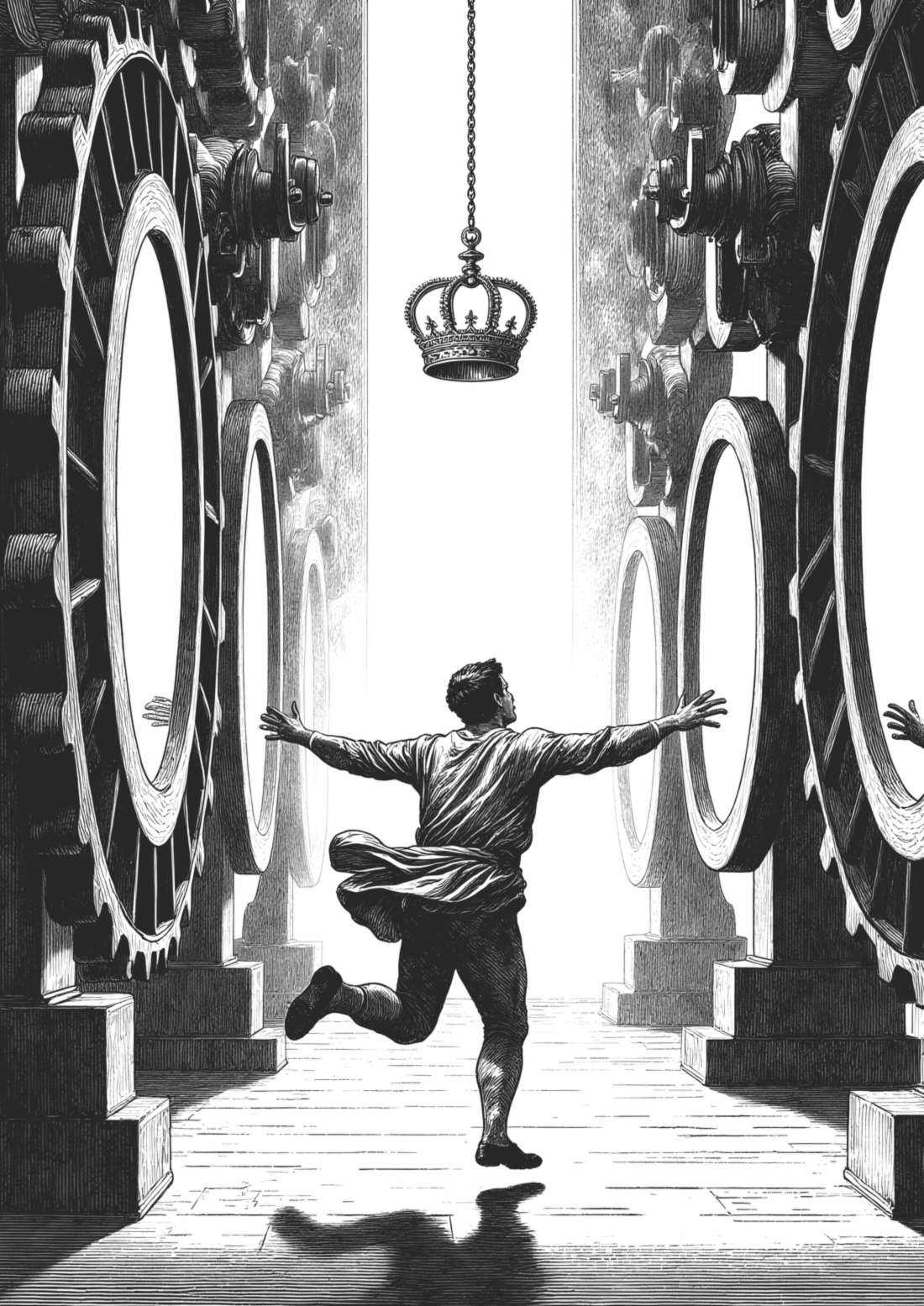
Book 2 · Attention Is the New Oil
II. The Machinery
Chapter 9 Seneca Checks His Phone
Sources and notes for this chapter, numbered as in the text and in Appendix A.
- 70 Quote 1: "gather and save your time, which till lately has been forced from you, or filched away, or has merely slipped from your hands." Seneca, Ep. I §1, tr. Gummere (1917, PD-US); two transcriptions agree
- 71 Quote 2: "I cannot boast that I waste nothing, but I can at least tell you what I am wasting, and the cause and manner of the loss." Seneca, Ep. I §4, tr. Gummere (1917, PD-US); two transcriptions agree
- 72 Latin verbs of Ep. I §1: time "auferebatur / subripiebatur / excidebat" (taken / stolen / fell away); Seneca calls the loss from carelessness the most shameful (Ep. I §1, paraphrase) Seneca, Epistulae Morales I.1 (Latin text, PD; Reynolds OCT / Loeb facing text)
- 73 Seneca: playwright, philosopher, senator, adviser to the young Nero; among the most powerful men of the first century; managed one of the largest fortunes of his age (Tacitus, Ann. XIII.42: enemies named 300M sesterces); accused of hypocrisy (preaching simplicity amid wealth); answered critics (not a sage, describing the road); withdrew from court late in life; letters to Lucilius written c. 62–65 AD Tacitus, Annals XIII.42 (Suillius' attack), XIV.52–56 (withdrawal); Seneca, De Vita Beata 17–18; standard biography (Romm, Dying Every Day, 2014)
- 74 Roman morning salutatio: clients and petitioners gathered at patrons' doors at dawn Standard Roman social history (e.g., Juvenal, Satires; Martial; OCD s.v. salutatio)
- 75 Seneca defended otium (leisure for thought) in a short treatise Seneca, De Otio (On Leisure)
- 76 In a later letter Seneca reports an unbroken day that no one interrupted, divided between rest and reading (with some exercise) — paraphrase, no quotation marks Seneca, Ep. 83 §§2–3, tr. Gummere
- 77 Late-1990s fieldwork with software engineers: "time famine" caused largely by interruptions/availability culture; with protected quiet periods, engineers rated their days productive more often (self-report; consistent with #172); quiet time lapsed after the study (researcher unnamed) Leslie A. Perlow, "The Time Famine: Toward a Sociology of Work Time," Administrative Science Quarterly 44 (1999): 57–81
- 78 Time poverty falls hardest on people with less money Kalenkoski & Hamrick (2013) and Giurge, Whillans & West, "Why time poverty matters for individuals, organisations and nations," Nature Human Behaviour 4 (2020)
- 80 English "surreptitious" derives from the Latin verb for taking away secretly/from beneath (sub-ripere), the filching verb of Ep. I §1 Merriam-Webster / OED etymology s.v. surreptitious (Latin surrepticius < surripere/subripere)
- 81 Ep. I §4: Seneca describes himself as free-handed but careful, his expense account balancing (paraphrase, no quotation marks) Seneca, Ep. I §4, tr. Gummere (1917, PD-US)