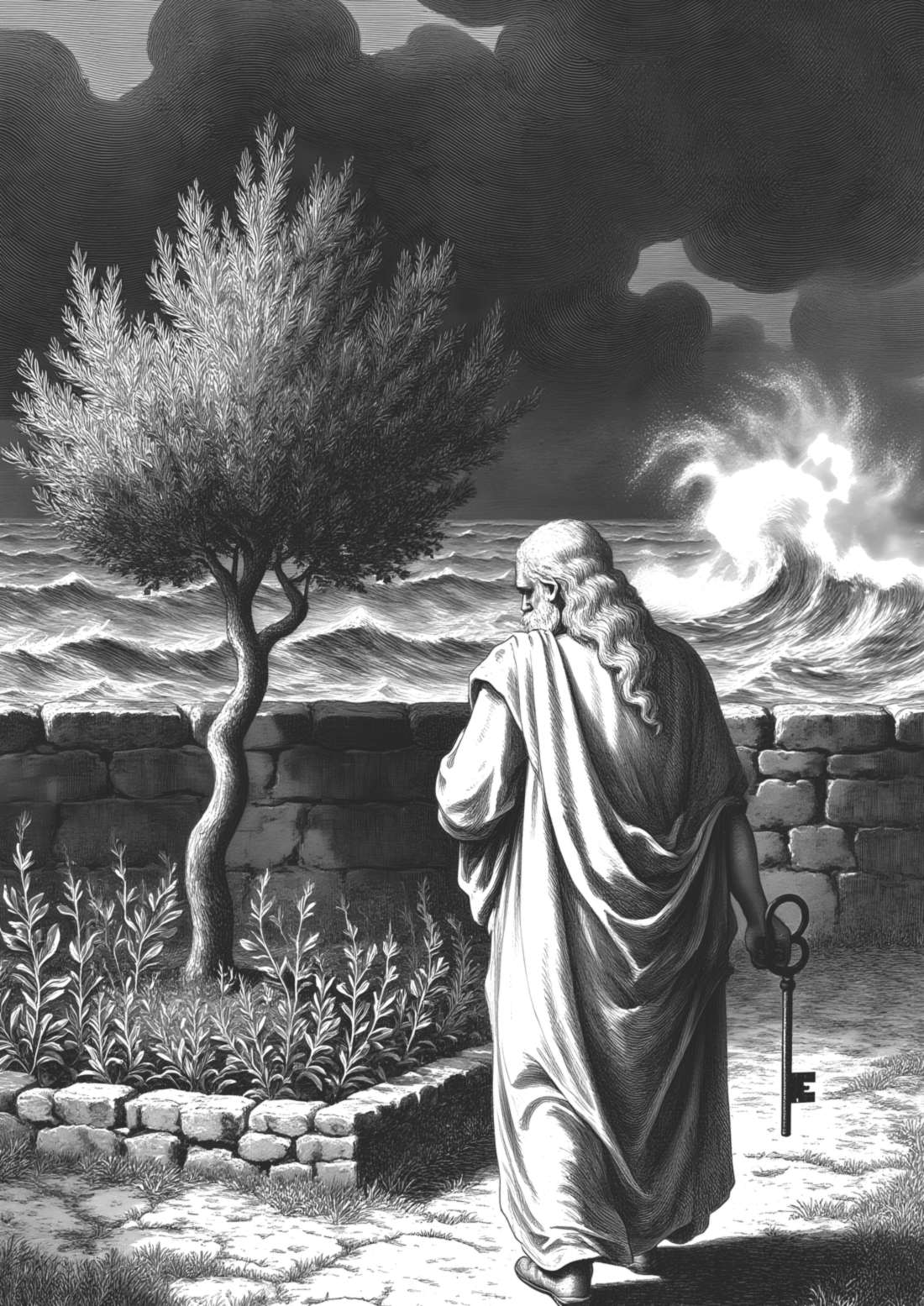
Book 1 · The Art of Not Caring (Correctly)
II. The Dichotomy, Rebooted
Chapter 7 Your Opinion of Me Is None of My Business
Sources and notes for this chapter, numbered as in the text and in Appendix A.
- 27 Spotlight effect: people attend to us far less than we assume ("mostly switched off") — qualitative, unnamed in text T. Gilovich et al., spotlight effect (2000)
- 28 Marcus: he had often wondered how every man loves himself more than all others, yet sets less value on his own opinion of himself than on the opinion of others — paraphrase close to Long; «a single note to himself» Marcus Aurelius, Meditations XII.4
- 29 Marcus: posthumous fame = relay of short-lived rememberers — paraphrase Marcus Aurelius, Meditations III.10, IV.19
- 30 Epictetus: answer a detractor "he was ignorant of my other faults, else he would not have mentioned these alone" — retold, no verbatim Epictetus, Enchiridion 33 (trans. G. Long)
- 31 Seneca, passing on advice credited to Epicurus: appoint a chosen witness/guardian ("choose a Cato") and live as if he watched — paraphrase, attribution in text Seneca, Epistulae Morales 11.8–10
- 32 Negativity weighting: censure registers more strongly than praise (alarm channel for social threat); in ancestral terms praise rarely decided survival, censure could — qualitative Baumeister R. F. et al., "Bad is stronger than good", Review of General Psychology 5(4) (2001)
- 46 Roman elite treated posthumous fame (statues, annals) as a supreme value; men spent fortunes on it — qualitative (softened from «bankrupted… the state», read10fix 2026-10-23) standard histories of Roman aristocratic culture (e.g., H. I. Flower, "Ancestor Masks and Aristocratic Power", 1996)